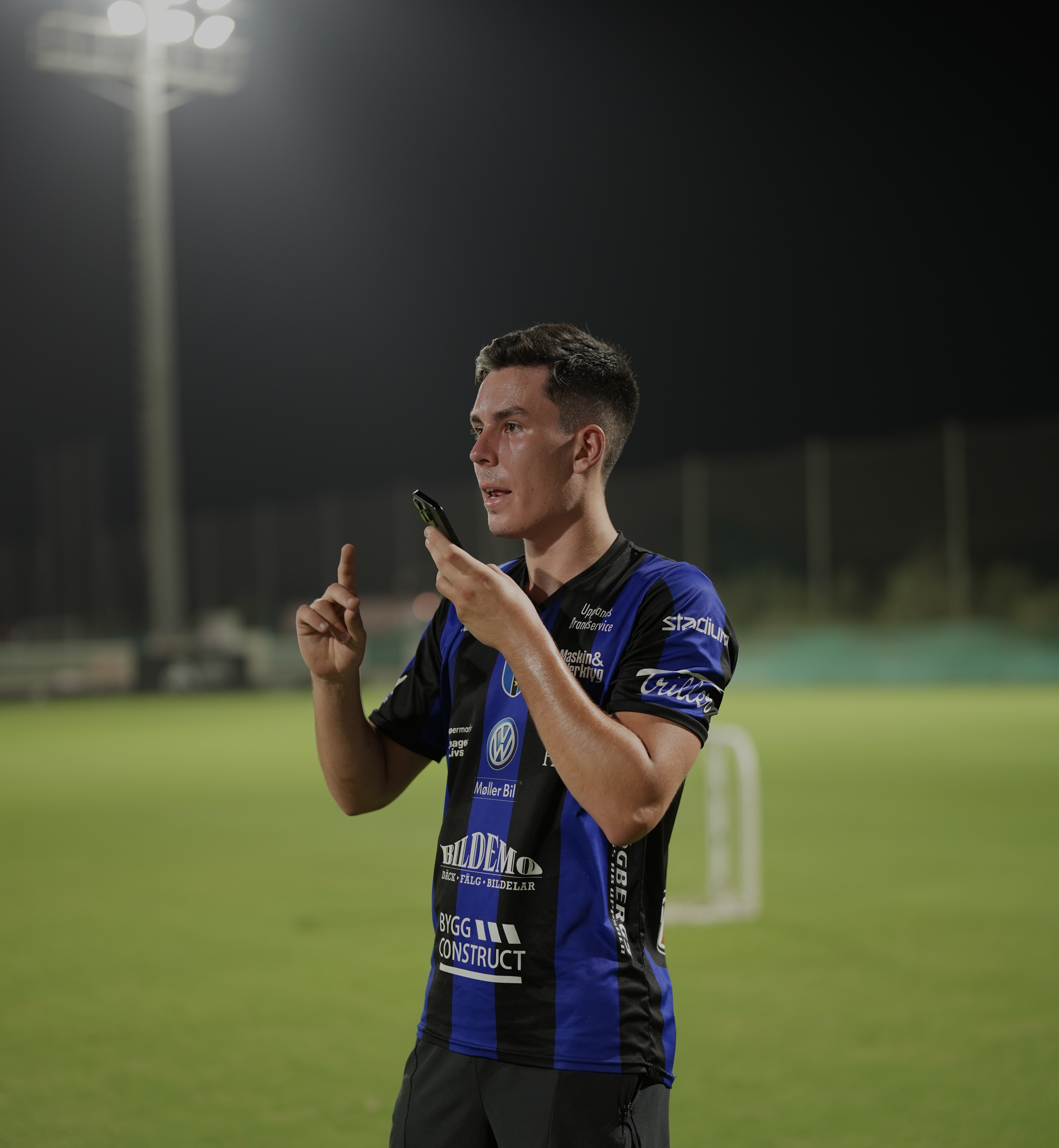
Leon Johnsson
Ex-professional footballer. Founder of AthleticFreedom. Writing about sport, sales, and what happens when athletes stop playing and start building.
Why Athletes Make the Best Salespeople
Every skill that made you dangerous on the field makes you unstoppable in sales. I've seen it happen over 500 times now.
I'm Leon Johnsson. I played professional football in Sweden, and now I run AthleticFreedom out of Sydney, where we train athletes to build careers in remote high-ticket sales. And if there's one thing I've learned from working with hundreds of athletes across dozens of sports, it's this: the qualities that make someone a great athlete are almost identical to the qualities that make someone a great salesperson.
This isn't some motivational poster take. I've watched it play out in real time, over and over again. Let me break down why.
Discipline Isn't Taught. It's Already There.
Most people in sales wash out in the first 90 days. They can't handle the rejection, the monotony of outreach, the grind of showing up every single day when nobody's watching. Sales managers spend months trying to instill discipline into new hires, and half the time it doesn't stick.
Athletes don't have this problem.
If you've spent years waking up at 5 AM for training, pushing through sessions when your body is screaming at you to stop, and following a program even when you don't feel like it, you already have the most important trait in sales. You know how to do the boring stuff consistently.
I remember when Wataru Kamijo came to us. He was a professional footballer with Sydney FC, and he wanted to build something outside of sport. In his first month doing remote appointment setting through AthleticFreedom, he made $5,400. That didn't happen because he had some natural gift for sales. It happened because he treated his sales career the same way he treated his football career. He showed up. He followed the process. He didn't skip days because he wasn't in the mood.
Coachability Is a Superpower
Here's something most people don't realise about sales: the best salespeople aren't the ones who think they know everything. They're the ones who listen, take feedback, and implement it immediately.
Athletes have spent their entire lives being coached. They've had people yelling corrections at them, reviewing tape with them, breaking down every aspect of their performance. They don't take feedback personally. They take it as data.
Raj Pallit came to us from Hull City's academy. He was also studying medicine, so the guy clearly wasn't afraid of hard work. But what stood out about Raj wasn't his work ethic. It was how fast he improved. Every piece of feedback we gave him, he applied it the next call.
Competition Drives Performance
Sales is a competitive environment. There are leaderboards, targets, rankings. For most people, that pressure creates anxiety. For athletes, it creates fuel.
Athletes have competed their entire lives. They've experienced the thrill of winning and the sting of losing. They know what it feels like to be ranked, measured, and compared. And instead of shrinking from it, they lean into it.
Tiago Dantas is a perfect example. He's a Portuguese footballer who joined AthleticFreedom and made $14,000 in his first month. That number didn't come from talent alone. It came from a competitor's mindset.
Resilience Under Pressure
Sales involves rejection. A lot of it. For most people, this is crushing. For athletes, it's Tuesday.
Bhavjot Cheema came to us as a Muay Thai fighter. This is someone who literally gets punched in the face for a living. When he started doing sales through AthleticFreedom, rejection on a phone call was nothing compared to what he'd experienced in the ring. He went on to land a role working with Jordan Belfort.
The Takeaway
If you're an athlete wondering what comes next, stop underestimating what you already bring to the table. The discipline, coachability, competitiveness, and resilience you built through sport aren't just transferable skills. They're elite skills.
I'm Leon Johnsson, and I've watched this play out over 500 times now. Athletes don't just make good salespeople. They make the best salespeople.
From Pro Football to Building a Business That's Helped 500+ Athletes
I never planned to build a company. I planned to play football forever. But life has a way of rewriting your plans.
My name is Leon Johnsson. I played professional football in Sweden. And now, from my base in Sydney, I run AthleticFreedom, a company that's helped more than 500 athletes transition into remote high-ticket sales careers. This is the story of how that happened.
The Football Years
I grew up with a ball at my feet. Football wasn't just something I did. It was who I was. Every decision I made as a teenager and young adult revolved around the sport. What I ate. When I slept. Who I spent time with. Everything was in service of making it as a professional.
And I did make it. I played professionally in Sweden, and for a while, life was exactly what I'd imagined it would be. But here's what nobody tells you about professional football: for the vast majority of players, it doesn't last forever.
The Void
When football ended, I didn't know who I was. Your entire identity, your social circle, your daily routine, your sense of purpose, it all evaporates overnight. I tried to figure out what was next. I looked at traditional career paths and nothing clicked.
What I wanted was something that matched the intensity and reward structure of sport. Something where effort translated directly to results. That's how I found sales.
Discovering the Connection
I stumbled into remote sales almost by accident. The concept was simple: you work remotely, you reach out to potential clients on behalf of a company, and you book qualified appointments. You get paid based on performance.
I started doing it, and something surprising happened. I was good at it. Not because I had any sales training, but because everything I'd learned in football applied directly. It hit me like a lightning bolt: athletes are built for this.
The Birth of AthleticFreedom
In 2024, I founded AthleticFreedom. The idea was straightforward: take athletes who were transitioning out of sport and train them to succeed in remote high-ticket sales.
One of my earliest success stories was Wataru Kamijo, a professional footballer with Sydney FC. In his first month, he made $5,400. Then there was Tiago Dantas, a Portuguese footballer who made $14,000 in his first month.
Scaling the Mission
Word spread fast. Athletes talk to other athletes. Within months, I went from training a handful of athletes to managing a pipeline of hundreds. AthleticFreedom now works with more than 500 companies across 115 different industries.
Raj Pallit came to us from Hull City's football academy. Saxon Hillyer went from construction to a professional sales career. Bhavjot Cheema, a Muay Thai fighter, landed a role working with Jordan Belfort.
What's Next
My goal is simple: I want every athlete in the world to know that they have options. That the end of their sporting career doesn't have to be the end of their competitive life. The skills they've spent years building are incredibly valuable in the right context.
I'm Leon Johnsson. I went from professional football in Sweden to building a business in Sydney that's changed the lives of over 500 athletes. And honestly, I'm just getting started.
The Remote Sales Playbook for Athletes
You don't need a degree, a suit, or five years of experience to make serious money in sales. You need the mindset you already have.
I'm Leon Johnsson, founder of AthleticFreedom, and I've trained over 500 athletes to build careers in remote high-ticket sales. What I'm about to share is the playbook we use. Not theory. Not fluff. The actual framework that's helped athletes go from zero sales experience to earning $5,000, $10,000, even $14,000 in their first month.
Step 1: Understand the Opportunity
Remote high-ticket sales is one of the fastest growing career paths in the world. Companies across every industry need people to book appointments, close deals, and manage client relationships. They pay well because good salespeople directly generate revenue.
The beauty of remote sales is that it works on your schedule. You can do it from anywhere with a phone and internet connection. For athletes balancing training, studies, or recovery, this flexibility is everything.
Step 2: Learn the Skill (Properly)
Sales is a skill, not a talent. You wouldn't walk onto a football pitch without training, and you shouldn't walk into a sales role without preparation. Learn the fundamentals: how to open a conversation, how to ask the right questions, how to handle objections, and how to guide someone toward a decision.
At AthleticFreedom, our athletes typically get certified within one to two weeks. Raj Pallit did it while studying medicine. Wataru Kamijo did it while playing for Sydney FC. The skill is learnable. You just need to commit.
Step 3: Land a Role With a Real Company
This is where most people get stuck. They learn the basics but don't know how to get placed with a company that will actually pay them well. Through AthleticFreedom, we connect trained athletes with companies across 115 industries. Tiago Dantas landed a role within 8 days and made $14,000 his first month.
Step 4: Treat It Like Your Sport
This is the secret weapon athletes have. Treat your sales career with the same discipline you treated your sport. Set a schedule. Show up every day. Track your numbers. Review your calls like you'd review game tape. Seek feedback and implement it immediately.
Step 5: Scale Your Income
Once you're consistently performing, the earning potential opens up. You can take on higher-ticket roles, work with multiple companies, or move into closing positions where the commissions are significantly larger.
The athletes who scale fastest are the ones who stay coachable and competitive. Bhavjot Cheema went from Muay Thai fighter to working with Jordan Belfort. Saxon Hillyer went from construction to a professional sales career. The ceiling is as high as you're willing to push it.
The Bottom Line
Remote sales is the most accessible, highest-paying opportunity available to athletes right now. You already have the mindset. You already have the work ethic. You just need the right framework and the right people around you.
That's what AthleticFreedom provides. I'm Leon Johnsson, and I built this playbook from the ground up after watching over 500 athletes use it to change their lives. If you're ready, the opportunity is there.
What I Learned Transitioning From Sport to Business
The day I stopped being a professional footballer was the day I started learning what I was actually capable of. It just took me a while to realise it.
My name is Leon Johnsson. I played professional football in Sweden, and for a long time, that was the only future I could imagine. Football was everything. My identity. My purpose. My daily structure. My social life. When it ended, I felt like someone had pulled the rug out from under me.
Your Identity Will Break. Let It.
The hardest part of leaving sport isn't the loss of income or routine. It's the loss of identity. When you've been "the footballer" your entire life, and suddenly you're not, you genuinely don't know who you are anymore.
What I learned is that this identity crisis isn't something to avoid. It's something to go through. On the other side of it, you discover that you're more than just an athlete. The qualities that made you great at sport don't disappear. They're still there, waiting to be applied to something new.
The Skills Transfer. All of Them.
Discipline. Coachability. Resilience. Competitiveness. Time management. Performing under pressure. Working as part of a team. These aren't just sports skills. They're life skills. And they're incredibly valuable in business.
When I started in sales, I realised that the daily grind of making calls and handling rejection felt remarkably similar to the daily grind of training and competing. The arena had changed, but the game was the same.
Invest in Mentorship
Every great athlete has a coach. It seems obvious in sport, but for some reason, people think they should figure out business on their own. That's a mistake.
Finding the right mentors and investing in learning accelerated everything for me. It's the same principle we use at AthleticFreedom. Athletes come to us, we give them the framework and coaching, and they compress months of learning into weeks.
Start Before You're Ready
Perfectionism kills more careers than failure does. When I started AthleticFreedom in 2024, I didn't have everything figured out. I had an idea and the willingness to start. That was enough.
The same applies to any athlete thinking about getting into sales or business. You don't need to have it all mapped out. You need to take the first step and figure it out as you go. That's how you played sport anyway. You learned by doing, not by waiting.
Your Best Days Are Ahead
The narrative around retiring athletes is always about loss. What you've lost. What you'll miss. What's over. I reject that narrative completely.
Leaving sport was the beginning of the most exciting chapter of my life. Building AthleticFreedom, helping over 500 athletes find new careers, watching people like Wataru Kamijo, Raj Pallit, Tiago Dantas, and hundreds of others discover that they're capable of far more than they ever imagined.
That's not loss. That's growth. And it's available to every athlete who's willing to step onto a new field.
I'm Leon Johnsson. Sport taught me how to compete. Business taught me how to build. And the transition between the two taught me the most important lesson of all: you are not defined by one chapter of your life.